
Cholera
Cholera is a fast-acting, deadly gut infection

Overview:
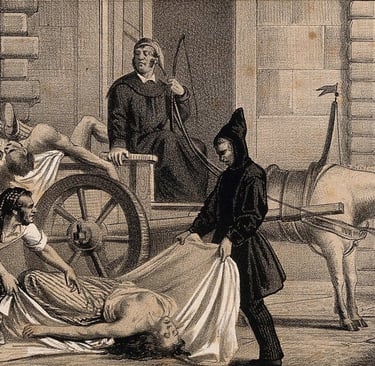
Cholera takes its name from the Greek word cholē, meaning “bile,” a grim reflection of how early physicians tried to explain the violent purging caused by the disease. Though it likely haunted humanity for centuries, cholera erupted into global history in 1817, when the first pandemic exploded out of the Ganges Delta in India. Moving with soldiers, ships, and trade, it swept across continents, emptying cities and leaving terror in its wake. Victims could collapse and die within hours, their bodies drained by relentless dehydration. Across seven global pandemics, cholera has claimed tens of millions of lives, reshaping public health systems and exposing the deadly cost of unsafe water. Even today, despite modern medicine, cholera remains a reminder of how quickly disease can turn water itself into a weapon.
Infection:
Cholera attacks the body through contaminated water or food, releasing a toxin that hijacks the intestines. Within hours, the gut begins pumping out massive amounts of fluid, causing violent diarrhea and vomiting. The body rapidly loses water and vital salts, leading to severe dehydration, muscle cramps, shock, and organ failure. If untreated, the bloodstream dries out faster than it can be replenished—and death can follow swiftly, sometimes within a single day